
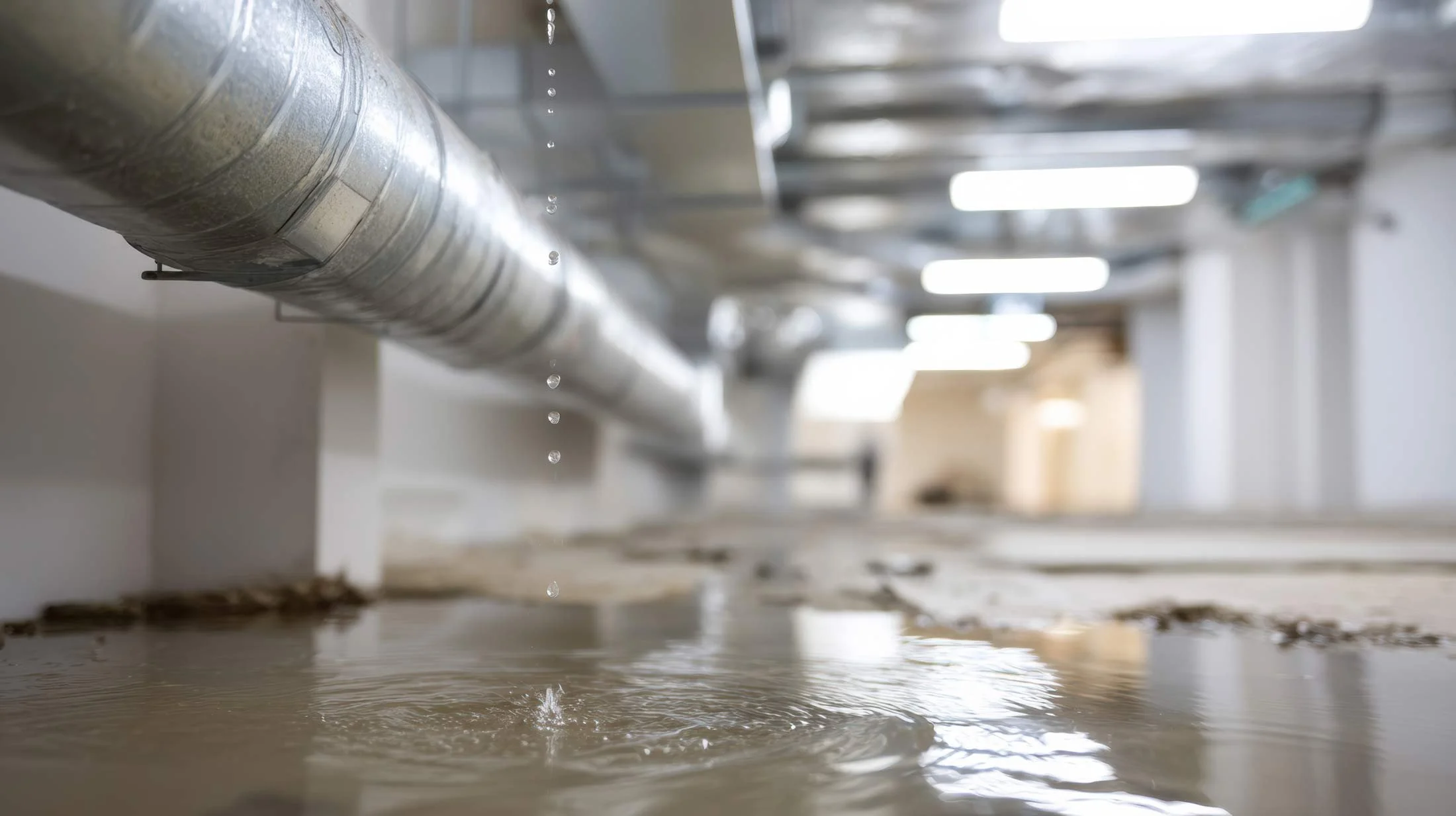
When winter temperatures drop, industrial and commercial buildings face a hidden but serious threat: condensation damage.
While snow loads and frozen pipes tend to get the most attention, condensation caused by temperature differentials can quietly compromise building integrity, indoor air quality, and operational efficiency—often without immediate detection.
Large facilities present unique challenges during cold weather. Their size, mechanical complexity, and constant temperature demands make them especially vulnerable to moisture issues that, if left unchecked, can lead to mold growth, corrosion, insulation failure, and costly repairs.
Understanding why condensation occurs—and how to prevent it—is essential for protecting your facility through the winter months.
The Science Behind Condensation in Large Facilities
Condensation forms when warm, moisture-laden air meets a cold surface. In winter, this happens frequently inside industrial buildings where heated interiors contrast sharply with freezing exterior temperatures.
Unlike smaller structures, industrial facilities often have:
High ceilings and vast air volumes
Continuous heating requirements
Multiple pressure zones
Complex HVAC and ventilation systems
These factors create ideal conditions for condensation to develop in places that are difficult to monitor—behind walls, above ceilings, inside ductwork, and around structural components.
Pressure Differentials: A Major Contributor
One of the most common causes of condensation in industrial buildings is air pressure imbalance.
When a building is under positive pressure, warm interior air is pushed outward through small gaps in walls, ceilings, and roof assemblies. As that air travels toward colder exterior surfaces, moisture condenses inside wall cavities and structural assemblies.
When a building is under negative pressure, cold outdoor air is pulled inside, often bringing moisture with it. This air can condense when it meets warmer interior surfaces.
Industrial buildings frequently experience fluctuating pressure due to:
Large exhaust systems
High-capacity ventilation
Loading dock activity
Inconsistent air sealing
Even minor imbalances can cause significant moisture accumulation over time.
Vapor Barriers: Critical—but Often Overlooked
Vapor barriers play a crucial role in controlling moisture movement, yet many older or heavily modified facilities have:
Improperly installed vapor barriers
Damaged or deteriorated materials
Incomplete coverage due to renovations or retrofits
Without a continuous and correctly placed vapor barrier, moisture can migrate freely through walls and ceilings. During winter, this moisture condenses within insulation and structural components, reducing thermal performance and accelerating deterioration.
Once insulation becomes wet, it loses effectiveness—driving up energy costs and increasing the likelihood of mold and structural damage.
HVAC Systems and Winter Moisture Control
HVAC systems in industrial facilities must strike a careful balance between heating, ventilation, and humidity control.
Common winter HVAC challenges include:
Overheating without adequate dehumidification
Inconsistent airflow in large or segmented spaces
Poorly sealed or insulated ductwork
Systems not designed for seasonal humidity shifts
When warm air circulates without proper moisture management, condensation can form on cold surfaces such as steel beams, window frames, and roof decking.
Regular HVAC inspections and seasonal adjustments are essential to maintaining stable indoor conditions during winter.
Where Condensation Damage Commonly Appears
Condensation damage often develops out of sight before it becomes obvious. High-risk areas include:
Roof decks and attic spaces
Exterior wall cavities
Around windows, doors, and curtain walls
Mechanical rooms and pipe chases
Above suspended ceilings
Steel structural components
Left unaddressed, these issues can lead to mold growth, corrosion, material decay, and even operational disruptions.
Proactive Steps to Protect Your Facility This Winter
Industrial building managers can reduce condensation risk by taking a proactive approach:
Conduct winter-specific building envelope inspections
Evaluate air pressure balance throughout the facility
Inspect vapor barriers during renovations or repairs
Ensure HVAC systems are properly calibrated for winter conditions
Address insulation gaps and air leaks promptly
Monitor indoor humidity levels consistently
Early detection and prevention are far more cost-effective than emergency remediation after damage occurs.
Partnering with Experts Before Damage Happens
Condensation damage rarely announces itself until the problem is significant. Working with a contractor experienced in industrial moisture intrusion, mold remediation, and disaster recovery can help identify risks early and protect your building’s long-term performance.
At DANE Contractors, we specialize in helping industrial and commercial facilities address hidden moisture issues before they escalate into major disruptions. Our team understands the unique challenges large buildings face during winter—and how to mitigate them effectively.