
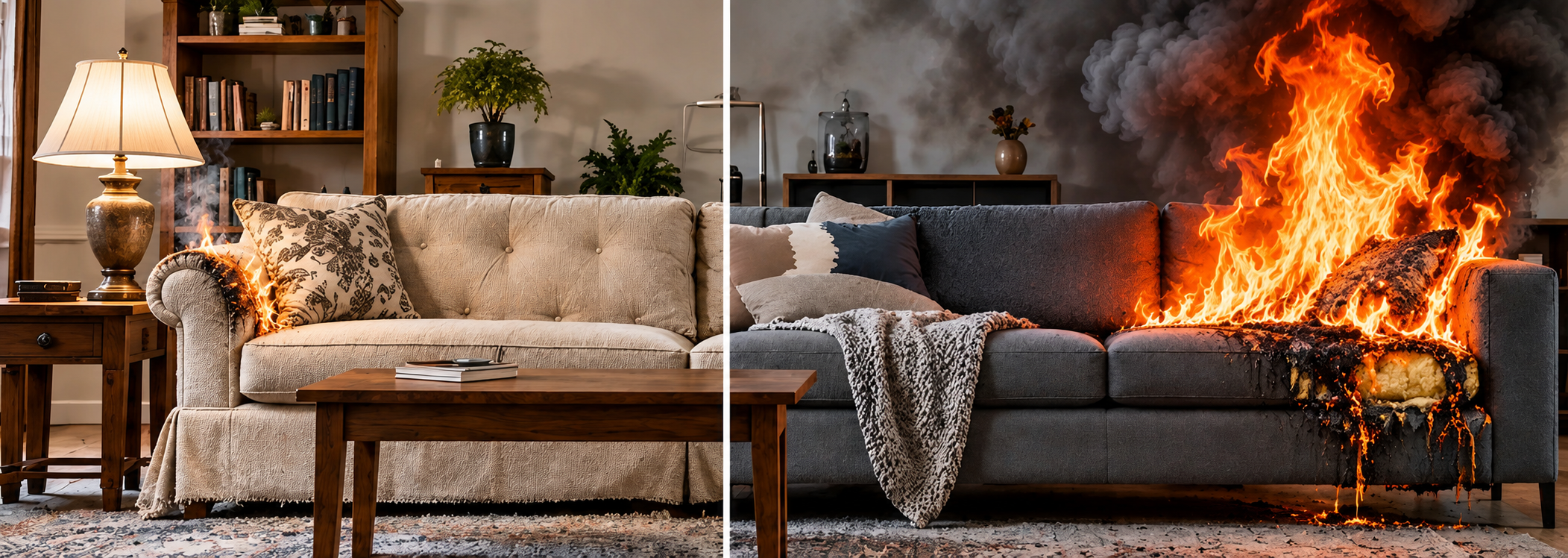
Fire spreads faster than you may think.
DANE Contractors shares important lessons in fire prevention, preparedness, and property protection.
October is Fire Prevention Month, an important reminder that protecting lives and property begins long before an emergency occurs.
At DANE Contractors, our experience in emergency disaster recovery and fire damage restoration has reinforced a critical lesson: Fire can change everything in minutes, and the time available to respond may be much shorter than you expect.
What many property owners don't realize is that the materials surrounding us every day — from furniture and carpeting to building contents and equipment — can significantly influence how quickly a fire develops.
Whether you're responsible for an industrial facility, a commercial property, or your family home, understanding these risks could make a life-saving difference.
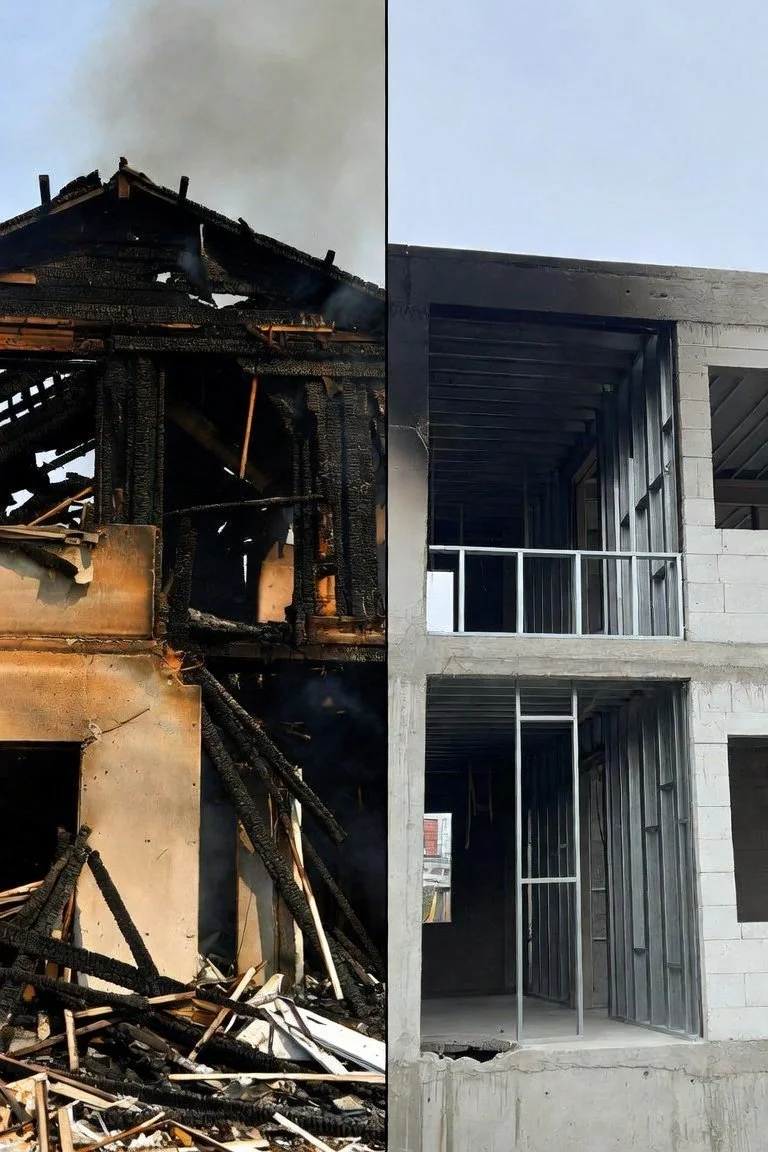
Then vs. Now: How Modern Materials Have Changed Fire Safety
Consider this startling comparison.
Researchers at the UL Fire Safety Research Institute (FSRI) conducted controlled experiments comparing two similarly sized living rooms. One was furnished with materials common decades ago, including cotton upholstery and natural wood furniture. The other contained modern synthetic furnishings, including polyurethane foam cushions and synthetic fabrics.
Both rooms were exposed to similar ignition conditions. The results demonstrated a dramatic difference in how quickly the fires developed.
Room with traditional furnishings: Approximately 29 minutes and 30 seconds to reach flashover.
Room with modern synthetic furnishings: Approximately 3 minutes and 40 seconds to reach flashover.
Flashover occurs when the heat within an enclosed space becomes so intense that exposed combustible materials ignite nearly simultaneously, creating extremely dangerous conditions.
These findings don't mean every modern fire will reach flashover in four minutes. Fire behavior depends on many factors, including ventilation, room layout, ignition source, and available fuel. But the research highlights how dramatically modern materials can accelerate fire development.
The takeaway?
We cannot assume we have time to investigate, gather belongings, or attempt to control a growing fire.
When a fire starts, every second matters.
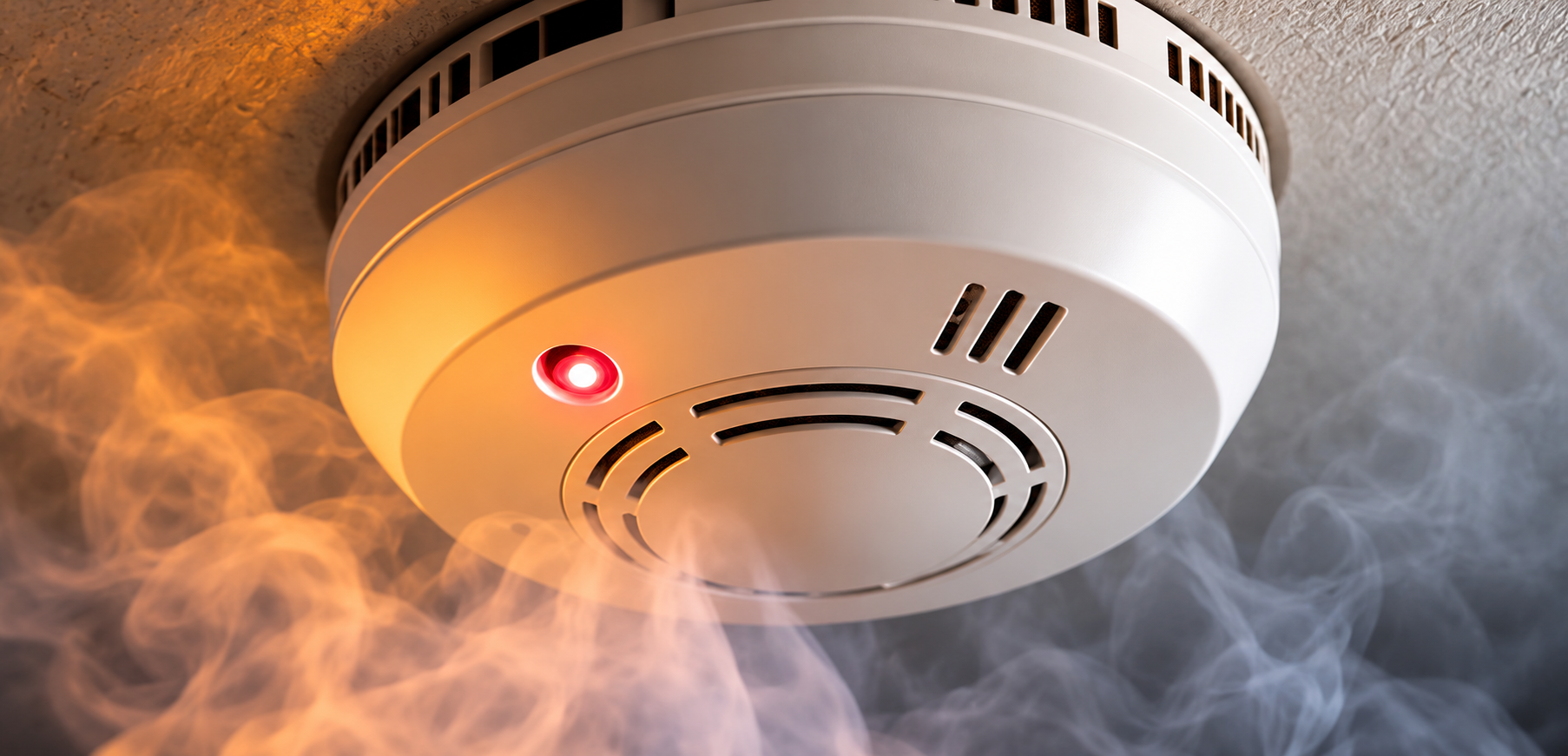
The Hidden Danger: Smoke Can Be More Deadly Than Flames
One of the greatest dangers in a structural fire isn't necessarily the flames you can see. It's the smoke you may encounter before reaching safety.
Many modern furnishings, insulation products, plastics, and building materials contain synthetic compounds. When these materials burn, they can produce dense smoke, intense heat, and hazardous gases.
Depending on the materials and fire conditions, combustion products may include carbon monoxide, hydrogen cyanide, and other toxic substances.
Smoke can quickly reduce visibility, impair breathing, cause disorientation, and make escape routes impassable.
Through our work in fire damage recovery, DANE Contractors understands that the effects of smoke and soot can extend far beyond the immediate area of a fire, affecting building interiors, equipment, inventory, and personal belongings.
The most important priority is always protecting people first. Property restoration comes later.
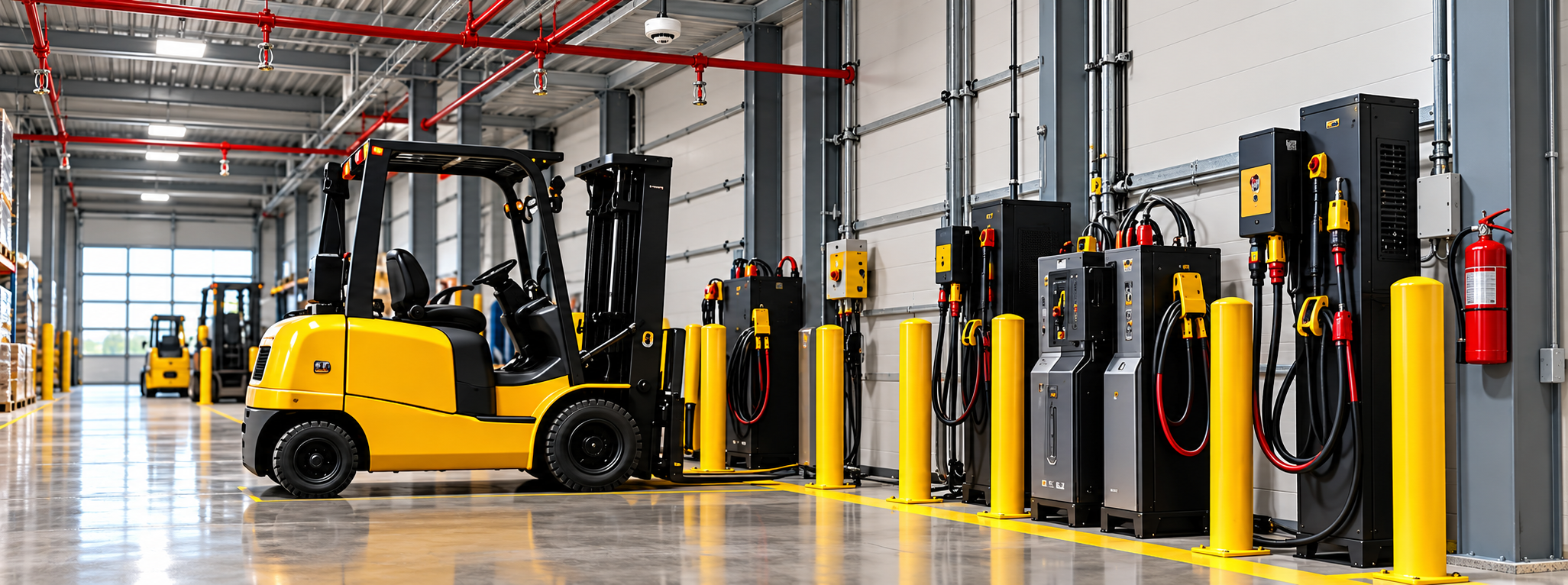
Industrial Fire Safety: Protecting Employees, Equipment, and Operations
Industrial facilities face unique fire hazards due to the combination of machinery, electrical systems, combustible materials, manufacturing processes, and stored inventory.
A fire in an industrial environment can threaten employee safety while creating extensive property damage and prolonged operational downtime.
DANE Contractors encourages industrial facility owners and managers to prioritize the following:
Evaluate Combustible Materials and Storage Practices - Identify where plastics, foam packaging, chemicals, flammable liquids, and other combustible materials are stored. Maintain proper separation from ignition sources and follow applicable fire codes and storage requirements.
Inspect Electrical and Mechanical Equipment - Overheated machinery, damaged wiring, overloaded circuits, and poorly maintained equipment can create fire hazards. Establish routine inspections and preventive maintenance programs.
Maintain Appropriate Fire Protection Systems - Ensure fire alarms, sprinklers, extinguishers, and specialized suppression systems are inspected and maintained for the hazards present in your facility.
Train Employees and Practice Evacuation Procedures - Employees should understand how to report a fire, recognize alarm signals, and evacuate safely. Conduct drills and establish designated assembly locations.
Develop a Business Continuity Plan - Identify critical equipment, records, production processes, and suppliers. Establish procedures that can help minimize disruption following a fire or other emergency.
For industrial property owners, preparation is about protecting both people and the continuity of operations.
Commercial Property Fire Safety: Prevention Is Good Business
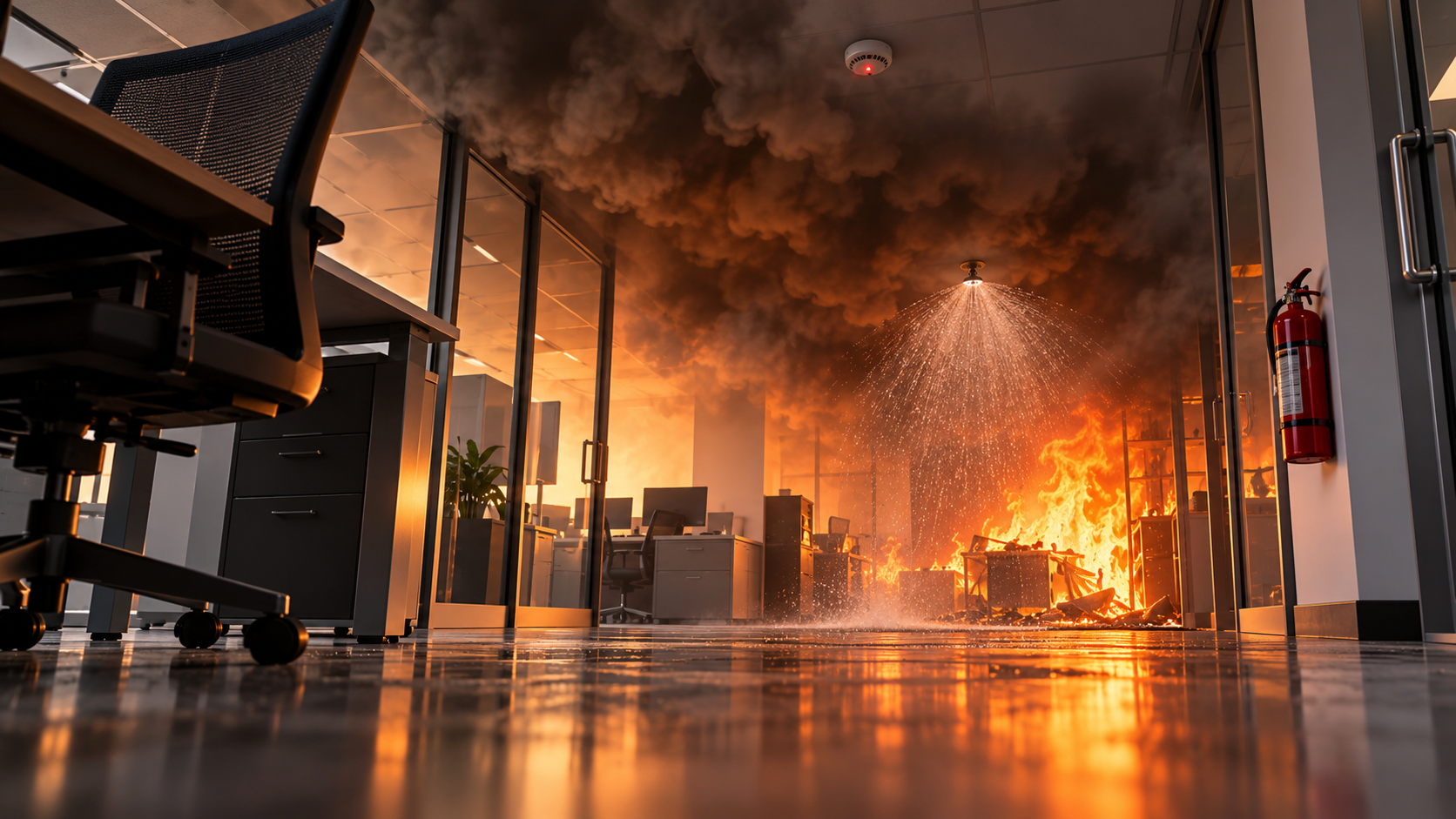
Commercial buildings contain a wide range of combustible materials, from office furniture and carpeting to retail merchandise, electronics, and storage supplies.
When a fire occurs, its impact may extend beyond the building itself, affecting employees, customers, tenants, and business operations.
Commercial property owners and managers should take several proactive steps:
Keep exits and corridors clear. Emergency escape routes should never be obstructed by furniture, equipment, merchandise, or storage materials.
Maintain alarms and sprinkler systems. Arrange regular inspections and testing by qualified professionals.
Review occupancy and fire safety requirements. Ensure building layouts, storage practices, and operations comply with applicable fire codes.
Practice emergency evacuation plans. Train employees and coordinate procedures with tenants and building occupants.
Address electrical hazards promptly. Damaged cords, overloaded outlets, and malfunctioning equipment should be evaluated by qualified personnel.
Maintain accessible emergency information. Keep evacuation maps, emergency contacts, and essential building information current.
A well-prepared commercial property is better positioned to protect occupants and reduce the potential for serious business interruption.
Residential Fire Safety: Your Family May Have Less Time Than You Think
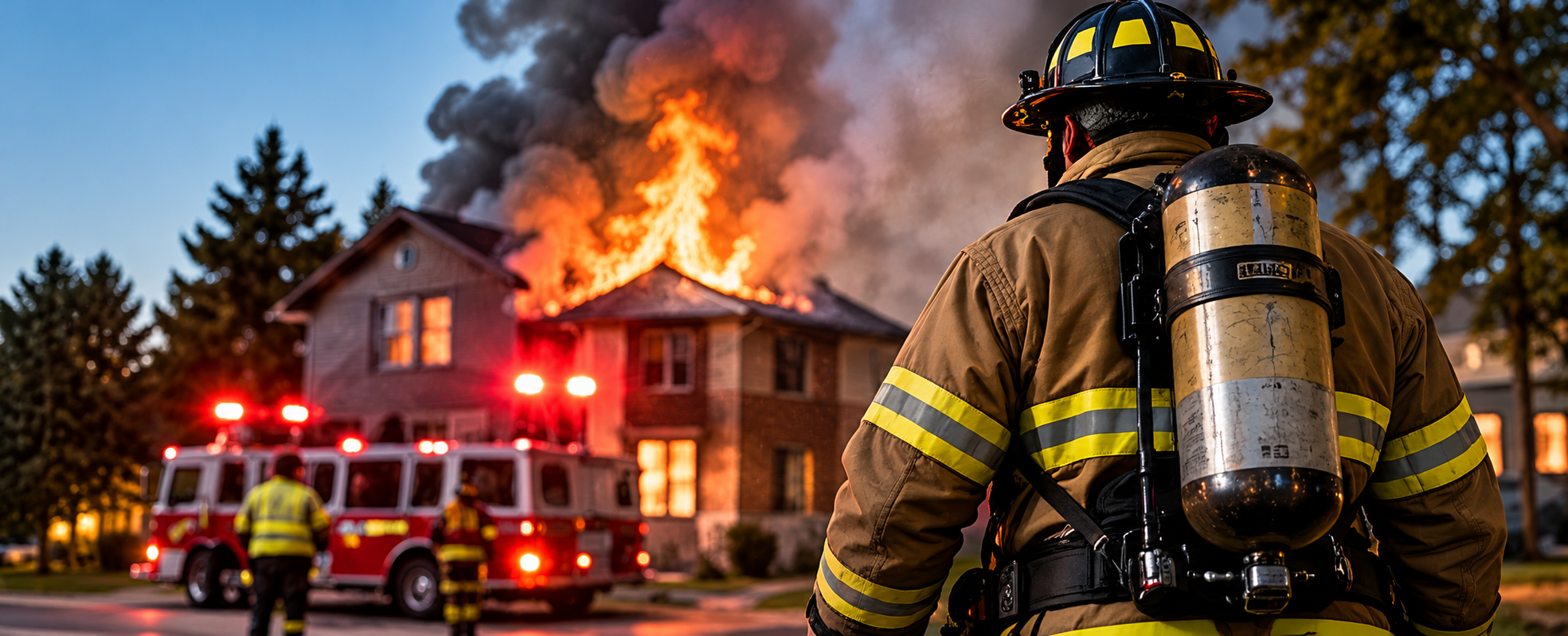
For homeowners, the findings from modern fire research carry an especially important message.
Today's homes are filled with conveniences and furnishings that can contribute to rapid fire growth. Combined with open floor plans and other building characteristics, these materials can create dangerous conditions in a remarkably short period.
The National Fire Protection Association (NFPA) warns that occupants may have as little as one to two minutes to escape safely after a smoke alarm sounds.
That's why preparation is essential.
Five Fire Safety Habits Every Household Should Practice
Install and Maintain Smoke Alarms - Install smoke alarms inside every bedroom, outside each sleeping area, and on every level of your home. Test them monthly and replace them according to manufacturer recommendations.
Create a Family Escape Plan - Identify two possible exits from every room whenever available. Establish an outdoor meeting location and practice your escape plan at least twice annually.
Close Bedroom Doors While Sleeping - A closed door can help slow the spread of smoke, heat, and flames, potentially providing valuable additional time during a fire.
Practice Safe Charging and Electrical Habits - Use manufacturer-approved charging equipment, avoid damaged batteries and cords, and keep charging devices away from combustible materials. Never allow charging equipment to obstruct escape routes.
Get Out, Stay Out, and Call 911 - If a fire occurs, evacuate immediately. Close doors behind you when possible, remain outside, and call emergency services. Never reenter a burning building to retrieve belongings.
Remember, the time to decide how your family will escape a fire is before one starts.
When Fire Strikes: Understanding the Full Impact of Property Damage
Even a relatively contained fire can cause significant damage throughout a property.
Beyond the immediate destruction caused by flames, property owners may face:
Smoke and soot contamination throughout affected spaces
Water damage resulting from firefighting efforts
Damage to electrical, mechanical, and HVAC systems
Structural deterioration requiring professional assessment
Loss of equipment, inventory, furnishings, or personal belongings
Temporary displacement or prolonged business interruption
At DANE Contractors, we understand that recovering from a fire involves more than repairing visible damage.
It requires careful assessment, coordinated recovery planning, appropriate remediation, and a thoughtful approach to restoring the property.
Our experience in emergency disaster recovery, renovation, and construction helps us appreciate the challenges industrial, commercial, and residential property owners face after an unexpected loss.
And while we're committed to helping property owners recover, we would much rather see a fire prevented in the first place.

Fire Prevention Month: Awareness Today Can Prevent Tragedy Tomorrow
Fire safety isn't simply about having extinguishers nearby or knowing where the exits are located.
It's about understanding how quickly conditions can deteriorate, recognizing potential hazards, and making prevention part of everyday life.
Modern fire research offers an important reminder: the materials in our buildings have changed, and our approach to fire safety must reflect those changes.
This October, DANE Contractors encourages everyone to take a few moments to evaluate their surroundings.
Test your smoke alarms. Inspect your workplace. Review your evacuation procedures. Talk with your family, employees, or tenants about what to do in an emergency.
You may not be able to control how quickly a fire spreads, but you can control how prepared you are before it starts.
DANE Contractors: Helping You Prepare, Recover, and Rebuild
At DANE Contractors, safety is a commitment that extends beyond disaster recovery.
We're proud to support Fire Prevention Month by sharing practical information that helps property owners better understand fire risks and protect what matters most.
When unexpected property damage does occur, our team is committed to helping industrial, commercial, and residential property owners navigate the recovery and rebuilding process.
Because protecting lives comes first. And when it's time to rebuild, experience matters.
Additional Fire Safety Resources
DANE Contractors
Emergency Disaster Recovery | Renovation | Construction